Wednesday, February 9, 2011

Small Pond; Big Fish: Keys to catching Bass In Residential Ponds


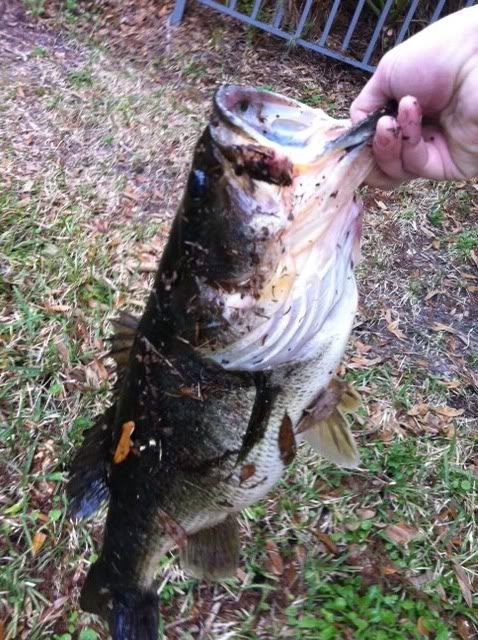
Nearly Everyone living here in the Tampa bay area has access to some type of small pond or lake. Many fisherman go right past them saying to themselves " oh no that pond is too small" or "It doesn't look fishy". Well I got news for you, the best bass I've caught have all been from ponds less than 3 acres. I caught a 6 lber in the 50000 gallon fountain pond in the front of my apartment complex. The fish was bedding with about a dozen others. The fish in the picture at the bottom was 10.5 lbs and came from a very skinny pond  running through my old apartment complex near USF that was about 3 acres total. The point is many small ponds don't see a lot of fishing pressure and if they do it is often by inexperienced anglers. This makes for great catching opportunities when you know what you are doing. It comes down to learning how the seasons, weather,water and solunar conditions play a role in the behavior of largemouth bass in small bodies of water. Here is the skinny on how to get on some bass in your neighborhood pond.

   First and foremost is selecting a pond. Unfortunately, all ponds are not created equal. Sometimes it is obvious that a pond is a good fishing spot and sometimes its not at all. Naturally formed ponds are almost always going to be the best areas and should be top on your list. This is mostly because of age. However, just because a pond is old and natural doesn't necessarily mean it will hold lots of fish. Still, established bodies of water that are more that 5 years old are usually the best places. What you are looking for is established populations of bluegill and or shiners/shad. If there are wild shiners you can almost guarantee there are good bass.

   The best tool for locating good ponds is Google Maps. A natural pond will have a natural shape and often good vegetation. Another good practice is to look through older apartment complexes/neighborhoods. These often have ponds that are 20+ years old that have established populations of fish. In the Tampa area there are lots of good ponds in the Tampa Palms area. Any retention areas that are along the edges of flooded swamp area are going to be good bets. Look for cypress stands next to the water, they are distinctly lighter in color than other typical scrub vegetation and makes them easily noticeable on a satellite image. USE GOOGLE MAPS TO YOUR ADVANTAGE!!! Go scout out ponds in your area. One of the most important things I have learned pond fishing is don't waste too much time on a single pond. The best technique is too have mutiple ponds you can hop around to. Don't get me worng, there are some times when you have to work for a bite. What I mean is that if you show up at a pond and you dont see any small fish or any activity at all dont sit there and cast and cast. Good ponds pretty much always show good signs of life upon close examination.

   These small ponds do not usually have huge populations of fish and more importantly the ideal feeding grounds for the fish are limited in area. Certain areas of the pond are going to be far better for feeding activity in terms of bottom structure/cover and deep water ambush/escape routes. However, these places are not always where the fish feel comfortable in terms water temperature and safety. Look for feeding areas off of points and in the back of coves. On top of that, look for hydrilla and eelgrass beds that are close to the points or back inside the coves. Grassy areas that are spotted with sandy holes are going to be prime areas to look for fish especially during the spring spawn. Predators like bass focus a lot on edges. This can mean the edge from deep to shallow water, edges of weedlines and grassbeds, or even something as simple as the edge of shadow being cast over the water. These edges create good places to ambush and camouflage. Perhaps the most ideal locations I regularly come across are hydrilla and eelgrass beds that are spotted with small sand holes and open passages through the weed cover. Bait fish like shiners and bluegill will often congregate in the small sandy holes and the bass will materialize seemingly out of nowhere and ambush. You need to look hard for these areas because they are UNDER the water and sometimes not easy to find. Next to your rod and reel THE MOST IMPORTANT PIECE OF TACKLE YOU CAN OWN IS A PAIR OF POLARIZED SUNGLASSES. This is something I cannot stress enough. If you don't have them you are walking right past most of the fish without seeing them and also walking past the best spots. If you are trying to catch fish in the spring you are completely wasting your time without glasses. Once you have got yourself some glasses and have located some promising spots within the pond, you need to know when is the best time to fish those spots. In my experience there really isn't such a thing as "ideal" conditions however some are better than others for catching.

     Timing depends alot on the seasons. However more important factors of timing happen on shorter time scales. One important thing that every angler should know about is the Solunar Phases. You can look up Solunar phases and get a detailed explanation. It boils down to this, every day there is a time when the moon and the sun are on opposite side of the earth or the same side, these are called "Major" periods and last for roughly 3 hours. When the sun and moon are at right angles to one another you have a "Minor" periods which occur during moon rise and moon set and last for about 2 hours. These times coincide with the times of the greatest tidal movements in Saltwater but they have an equally large effect on freshwater species as well. No matter what time of year Major periods are the best times to fish (all other conditions constant) and minor phase are a close second. The strongest major and minor phases happen on new and full moons.You can look up solunar calendars for your area on Google. These sun and moon phases are a type of clock for the fish to help them organize their behavior to be more successful as a species. Solunar effect is stronger as you work your way down the food chain. For example bluegills will all spawn right on the new and full moons that way they are all together at once making it hard for predators to take advantage of them. In my experience shiners seem to congregate on these days and then move into the shallow coves and spawn 2-3 days after the new or full moon. Big schools will be seen running about and can easily be caught with even a small cast net.

  Spawning activity in bass is perhaps the behavior most closely linked with these solunar phases. In the Tampa area the first major moon phase of February usually signals the start of bedding season if the winter is relatively mild. Almost always on the new and full moons of spring for about 3-4 days surrounding each major moon phase, there will be a huge rush to bedding areas. This movement is sudden and dramatic. Often you might not see any beds 3 days before the new or full moon, then the next day the bedding areas are LOADED with fish. Then a week or later they thin out again and fry are left behind with a male to guard them. This process repeats on every full and new moon from February until May, with a peak in late March. However, remember that the bass are at the top of food chain so it is not always so important to be on a new or full moon to find the bedding/feeding fish but it is a good habit to make.

  Solunar phases are usually very important to get big bass. However in the pond I caught the 10.5 lber there is a fish that is easily 12-13lbs and likely is the biggest fish in the pond. I have seen the fish dozens of times and she seems to be bedding whenever the heck she feels like it. The point is that although I am giving rules that should be followed to maximize your chance of success, some fish don't care about our stupid ideas about how they "should" behave so by all means do your own experimentation. I guarantee you will find somethings in your ponds that will contradict the "traditional" bass wisdom.

  Now solunar majors and minors are usually going to be your best times, however especially in the summer, one of two daily major periods falls in the middle of the raging hot day. In these conditions I would not count on big bass biting in these small ponds unless you have some heavy cover near deep water. When temperatures rise make it an early/late game. Solunar major phases as well as minor phases occur about 12.5 hours apart. Thus, if you have a Major periods from 11am to 2 pm you will have one again thatb same night from about 11:30pm to 3am. So when the thermometer is up fish when water temeperatures are going to be the coolest and if you fall on a major or minor phase, even better.

  Winter time can be a good time to get on pond bass. Look for days with pressure lower than 30 millibars just prior to frontal systems for some great action. The key to winter bass is to fish VERY SLOWLY with a dark colored worm. Sometimes lighter colors can be good too due to increased water clarity in the winter but if the bottom is dark I would fish with a dark colored bait.

  Now that we have discussed a little about when to fish, lets talk about these baits. Small pond bassin is not like big lake fishing. In my experience, leave the crankbaits at home, unless you know there is good submerged structure. In most residential ponds fish are going to be within 15 ft of the shoreline on the dropoff, so shoreline structure and small bottom features near the shore are what you are going to want to fish effectively. Another very important aspect of bait selection for small ponds is subtlety. Loud rattling and splashing baits are not usually going to be the best producers. The fish are not used to noisy environment and are usually easier to spook with loud sound. The best go to bait, hands down, is going to be a SENKO type worm texas or wacky rigged to be weedless in a dark color. This type of bait can still give good casting distance but yet still be subtle. If you have lots of lilly pads, frog and lizard baits can be deadly also. 80% of all the fish I have caught have been on a Texas rigged worm or jerkbait with a small 1/16oz or 1/8oz weight. Colors are pretty simple, junebug or dark purple are usually the biggest producers, however in the spring when fish are bedding more natural or highly visible bright colors can be more effective since the water is often at its clearest this time of year.

   However, if you are hardcore like me and you want the BIGGEST bass in the pond there is only one bait, GOLDEN SHINERS. Cast netting live bait is something I do often in my local ponds. When I walk up to the pond with my net other fisherman look at me like I am crazy. However, when they see the fat wild shiners that I pull in the ridicule turns immediately to envy. Shiners are found readily in many ponds from February to late November. Look for small ripples hitting the surface almost like raindrops to locate them. In the spring, late summer and fall they spawn and often you can just spot schools underwater with a pair of polarized glasses from the shore and get plenty. Live bait is a lot of work, I know, but trust me if you put in the effort it will pay off. I have a good pond near my apartment that I will net them in. If i don't catch anything there I will take about 2 dozen and put them in my cooler in the car and take them to some other ponds that are devoid of shiners and they get ATE UP!! If you throw a shiner into a bass bed you will 99.9% of the time get that fish to bite even if they turn their nose to everything else. Watching a 6lb bass inhale your shiner is truly amazing to watch and it is like clockwork. Another great thing about live bait is that it gives you an advantage over pretty much every other fisherman that hits the pond. In the ponds that are fished regularly by other anglers, this can be the key to really slaying the fish and have a 20+ fish day or getting that elusive 10+ lber.
 
To sum it up here is small break down for each season.

Spring- This is spawning season, if there is one time of year to hit the pond it is spring. Fish around new and full moons during major and minor solunar phases. Don't be afraid to fish in the middle of the day since the water temps are still down this time of year. Get a pair of polarized glasses and look for fish sitting on beds. This is the time of year you can sight fish bass effectively. Fish with a small creature bait or worms and throw it in the nest and just wiggle it or give it small twitches. Look for the fish to flare it's fins and point nose down to pick up the bait and be ready to set the hook fast when you see the bite. If you can get live shiners you will catch or hook pretty much every bedding bass you will find. If you are willing to work it will pay dividends and it is probably the most fun thing to do in bass fishing.

Summer- Fish early and late here. Best bite is usually at sunrise or during major solunar phases in the dead of night. Look for baitfish schooling and bass blowing them up. Summer and fall is when the fish will eat the most and be at their heaviest and are going to be keyed in on shad and shiners. A small weighted jerk bait can be deadly on schooling bass. Swim baits like the sebile stick shad soft and magic swimmer soft are my top baits for these schooling bass.
Fall- Fall is the peak of the baitfish season and is when you will see the most baitfish and the most aggressive schooling activity. In small ponds look for migratory birds like comarants/annhingas. Often they will make some of these ponds staging point for their migrations and if there are lots of fisheaters you know they are lots of small fish (probably shad and shiners). These fisheaters tend to congregate the bass and out compete them for food. Look for ponds with lots of fish eaters in the fall to produce bass. In general water temps are up in the fall so early and late is still a good way to go but DON'T FORGET THE SOLUNAR PHASES!
Winter- Winter is a hit and miss time for small pond bass. When temps drop the fish congregate in the deepest water in the pond usually. The most important thing in winter is to fish slow right on the bottom. Winter fishing is when the classic Texas rig worm succeeds the most or a shaky head rig. Definitely don't waste time in the winter. Winter days are boom or bust in small ponds, really nothing in-between. Warm days just prior to frontal systems are going to be the best days.

I hope this article will help you locate and pick apart some of your local ponds. Good luck out there guys!
Tuesday, January 25, 2011

St. Joseph Sound - Seatrout Mecca

   I was born in Mease Dunedin Hospital and have spent at least half of my life fishing the beautiful St. Joseph Sound. Fishing in St. Joseph Sound has always been good but has improved even over my life time. The ICW here is wide and there are expansive grass flats that are home to essentially all of the coastal species including redfish, snook, and especially seatrout. Of all the areas I have caught seatrout here on Suncoast, the waters around Dunedin have always produced the largest and most numbers of trout. Fishing competition can be pretty serious here on a weekend but that doesn't mean you can't get up on some gator trout. Knowing a few things about trout biology as well as what baits and conditions are best will help you hone your trout fishing skills. This article is intended to help you be able to put trout in the boat here SJS in any season.

                               A solid Seatrout taken just north of Dunedin Marina in December of 2007

   Perhaps the most important thing to remember when targeting Seatrout on open grassflats is that they DON'T MOVE FAR. Most all trout are going to live their entire lives within a few miles from where they were born. On top of that about 90% of seatrout's movement is in an East-West direction. The direction will depend on a host of factors including wind, tide,and season. This little piece of knowledge can help tremendously when trying to locate trout. If you were on them yesterday and come back the next day and they are not there, your best bet is to move almost directly east or west and you will likely find them. Generally speaking, trout fishing is a factor of the seasons so here is a general break down of St. Joseph Sound trout fishing for the whole year.


  •  Winter-Perhaps the best time to get on a gator trout in the Sound is in the peak of winter. Cold weather seems to concentrate fish in areas where food is abundant. The key to winter fishing in St. Joseph Sound is getting out of the wind. If you are not being pummeled by a 15mph NW wind your winter options for trout are bountiful. Winter brings very low tides to St. Joseph Sound and anglers can take full advantage of bottomed out low tides to get on some monster fish in potholes. The first few spoil islands on either side of the Dunedin Causeway are surrounded by these sandholes that usually have at least a few trout in them. Now this might sound crazy but if you really want to know the secret to catching the biggest gator trout in the winter time in SJS, fish at night. Yes, that's right when the sun is NOT out. This is against much "common knowledge" of winter fishing but I can tell you the biggest spookiest trout feed on calm winter nights with high tides. My personal best trout of 33" was taken on a bitter cold, foggy night in early February of 2007 off a dock in Dunedin. The name of the game is to fish SLOW. When I say slow I mean each cast and retrieve should take at least 2-5 minutes with very small twitches of the rod tip with slow intermittent reeling. If your fishing shallow flats that are less 2 ft the best lure for this is a texas rigged Berkely Gulp Shrimp or something similar. Smelly lures like a gulp give you a big advantage when fishing very slowly. The more moon and skylight you have the lighter the color of the bait and vice versa. For night time fishing in depths greater than two feet perhaps the best trout lure out there is the all white 12-fathom SLAM-R or "Ghostlure" with a 1/8oz. Mission Fishin jighead. Try the flats on the Eastern shoreline north of Dunedin Marina. Also from Dunedin Marina to Stevenson's Creek along Edgewater drive is a great place to catch big trout from land during night-time highs. The water is shallow here so go with the texas rigged gulp shrimp or Exude DART. Fishing during the day time can also be very productive. Look for calm days with EXTREMELY low tides. Kayak anglers and those willing to put on a pair of waders can have banner catches of seatrout during mid day lows. Fish with small weedless jerk baits for the biggest success. Look for fish laying in pot holes or on the edges of channels or flats. Some of the biggest fish can be in less than 1 ft of water so don't be afraid to go shallow
  • Spring-Early Spring is an excellent time to fish for trout in St. Joseph Sound. Spring is when you have the most options trout fishing. Flats that are 4-6 ft in almost any grassy area of the ICW will hold small to medium sized trout most of the day. However, most fish will be near the spoil islands and Eastern shoreline this time of year. Many of the same winter flats are going to hold lots of trout in the spring. If you took advantage of winter low tides to find deeper areas of flats hit these areas thoroughly. In the Spring, days get longer days and higher, bigger tides make these areas prime deep-water escape routes and staging areas at the beginning and end of moving tides for big fish. When the tide is up they may still be in these deep areas but are more often on the edges of sand patches in 2-4 ft of water as close to the main shoreline as possible. These deeper areas may only be 6" to 1.5ft deeper but that makes a big difference for ambush predators like trout that can use 6 extra inches of water to hide effectively. When the water hits about 65-67 degrees in the spring trout start spawning. Some of the best days are just before this spawning activity begins. The fish tend to congregate before they move out to spawn near the passes. Look for calm days with some good sunlight and a high tide and toss jigs around the docks one the Eastern shorline in about 4ft of water. Top lure picks here are Exude Dart in Natural shrimp color or pumpkinseed with 1/8oz Mission Fishing jighead. Equally deadly is a DOA CAL paddle tail minnow in greenback or baby bass or Exude RT Slug in the same colors with 1/8 oz CAL jighead. The spoil island to the North of Dunedin Causeway are all PRIME spring trout spots with 20+ fish days with few small enough to keep are not uncommon.
  • Summer- Summer time trout fishing is an early and late affair (MOSTLY EARLY). Some real gators are caught in June and July in the pre-dawn hours until about 7 AM on Topwater plugs. Hurricane Pass and the beaches of Caladesi and Honeymoon within 2 miles of the pass can hold schools of 18-22" fish in late May and June. A topwater plug thrown in the surf just before dawn is a great way to catch a fat keeper trout and maybe a nice snook as well. When beach fishing for trout wading is sometimes necessary because they often sit on the far side of the bar as opposed to being in the swash channel. The pass it self will hold lots of trout in the morning too. A good swimbait in a whitebait pattern fished near the bottom is best in this situation. If you have live white bait, even better. Some of the best summer trout action in St. Joseph Sound is going to be on the back side of Honeymoon and Caladesi Islands as well as 3-rooker and Anclote key. Most fish are going to be concentrated on the flats just inside of the passes. These are good places to fish after 7 AM until about 9or 10ish.
  • Fall- The summer spawning seems to stop abruptly near the 4th of July and fish linger near the barrier island until the beginning of October. Come that time fall starts to be in the air and the fish usually take a pattern that is a mirror image of their spring time movements. Fall is the time when there is the most bait and food available and is the time to fish with big baits. Big sardines are deadly on trout schooled up in flats sandholes on the Eastern shoreline of the ICW. Dock fishing can be very productive this time of year with live bait and trout are just one of the many species you will run into along with reds and snook. The same tactics for spring trout are deadly for fall trout. Look for water temperatures around 70 degrees with clear relatively calm days with high tides to be your best bet. Overcast days in the late fall can be made topwater fishing on the flats. The fish are still active enough to hit the baits and the winter winds haven't yet scoured the grassflats and created and a perpetual topwater seagrass salad to foul up the lure. Topwaters are deadly because they are excellent search baits and can be cast nearly twice as far as many other lures making covering water easy. Don't overlook night time docklight fishing in fall. On top of trout you are likely to run across a snook or red as well. The light on the fender on the south side of the big bridge at the Dunedin causeway usually has hundreds if not thousands of trout on it in the fall. When fishing around lights at night, look for smaller fish directly in the light and the gators to be shadowing the edges of the darkness.

5 Great Snook Spots for Land Based Anglers

        Living in the bay area for 23 years now, I have seen and caught my share of snook from 40"+ monsters to 1lb acrobats. Many anglers targeting snook fish from flats boats and concentrate their efforts on mangrove points, potholes, and passes in during the peak May-October season. However, as many veteran snook anglers know, some of the best oppurtunities for catch big numbers and size of fish come from land. This has to do partly with the snook's biology and partly with geography. The biggest snook I have ever landed was 43" and was caught from land in small creek. The most snook I have ever landed was around 25 also from land in a small creek. Creeks are not the only places to get on snook from land here in the bay area. This post will hopefully help some of you guys out there without boats to get on a linesider this season. Here are 5 spots you may not know about to get you started on your hunt.
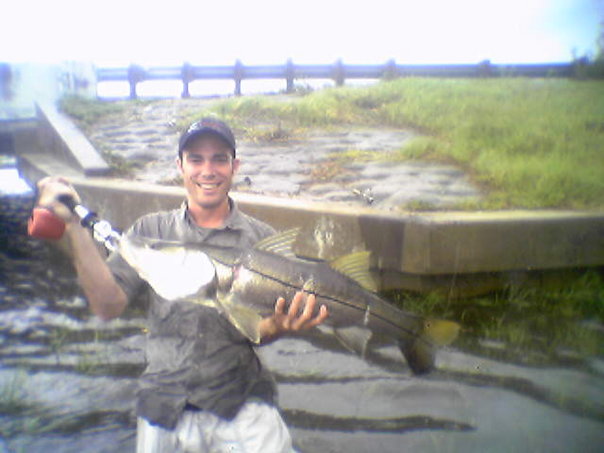
Stevenson's Creek 17lber June 2007
  1. Sulphur Springs- This spot is a natural spring in the Hillsborough river that lies between Florida Ave. and Nebraska Ave. on the river. There is a spring pool that spills out into a small creek that runs for several hundred feet before joining with the main river flow. Being a spring with a relatively constant temperature in the low 70s, this spot can be LOADED with snook in the winter.  Starting in late December when the bay dips into the low to mid 60s fish start piling in. There is a small park at the spring itself that runs west from Nebraska Ave. to the another park called River Tower Park near Florida Ave. The fish are bound to be anywhere in the stretch of river. Look for fish cruising the shoreline or laying near the bottom where the spring creek meets the main river channel. Low light conditions are always best here and lures that imitate small bass or mullet will be most productive. However, If you can get you net on some of the schools of small Tilapia, Mullet, or that are cruise the shorelines, you will increase your odds 5 fold at this spot. The best live bait will be live shiner though with no close second. Shiners are fatty and oily and are essentially rhe greenbacks of freshwater.The snook in this area tend to be finicky and are also not fished often with live bait so if your willing to work, it might just pay off. Sulphur Springs will hold the most fish in the hottest and coldest parts of the year. I have seen several monsters over 20lbs here this past December eating foot-long mullet. 
  2. Stevenson's Creek- This spot is what I would call a "boom-or-bust" spot. The Creek is located just south of Dunedin along the ICW. Don't let the urban setting fool you. Snook frequent the creek most of the year especially spring-fall. The best conditons for a "boom" at this spot are going to be a strong outgoing tide after or during a hard rain in the late spring, early/mid summer and fall. Rainfall is important here. The more it rains the more likely this spot will produce. The creek drains a large suburban area and after heavy rains, finger mullet and killifish are washed out of the creek by the thousands. During these conditions the bridges along this creek all the way to the mouth can be some of THE BEST spots to get on a snook from land. Just get on the east side of the bridges and cast or skip under the bridge with a greenback DOA CAL paddle tail or Exude RT Slug in gold glitter or baby bass color with and 1/8 oz. jighead. If the current is going hard enough you can simply just let it do the work and jig the bait up and down. HOLD ON because the fish have the advantage here. Ten snook days with fish to 15lbs are not uncommon. The key is don't waste your time here. If it is going off you will see the water boiling. If you don't see any finger mullet chances are the won't be good action. Another strategy for this spot if the bridge doesn't produce and the tide is low and outgoing is to wade out and fish the edge of the channel flowing out of the creek mouth. The water is shallow to the right of the channel and you can easily wade out a hundred yards on a lowering tide. Look for mullet schools on the edges of the channel and you might just get a nice linesider.
  3. Philipee Park-Located near Safety Harbor this spot can be a dynamite fall fishing spot. Snook will start showing up here in the end of August and stay until late November. The key to this spot is to fish early or late on a high tide that is on its way in or just starting go out. The park is not open at sunrise unfortunately but stays open until dusk. The hour or so before dusk is the prime time to target snook here. This is a fun spot to fish because the fish are layed up on flats the are covered in oysters and small rocks. This makes it hard to fish jigs but thats OK because a topwater walking plug is about the best thing at this spot with a suspending twitch-bait coming in at a close second. There is a large mangrove point in the middle of the park. Concentrate your efforts south of this point to the end of park. The key to this spot is timing, don't waste your time during peak daylight hours, you will see lots of them but they typically won't feed unless you got your hands on some live sardines then you may have a good chance. This spot usually produces small to upper slot fish but the topwater action makes it well worth it.
  4. Alligator Lake Outfall- A few miles to the south of Philippe park lies Alligator Lake. Driving down Bayshore Blvd. you will come across a spillway where the lake flows 24/7/365 into the bay. This spot is no secret but it is similar to Stevenson's Creek in the fact that it is usually "boom or bust". You can park near the bridge on the side of the road and fish under the bridge and at the spillway. This spot is best in the early summer and fall but produces in the meantime. Ideal conditions here are during or after heavy rains. This is another spot you can't judge at first sight like Stevenson's Creek. The fish here often feed in huge voracious bursts that starts with one fish making a run for a fish and often leads to all the fish taking adavantage of the chaos. Toss a SMALL bait like DOA CAL paddle tail amongst the chaos and you may hook up. The fish here usually really key in on the small mullet that gather below the spillway. A freelined live finger mullet is the best bait here and can connect with a fish from 2-25+lbs. If you are fishing with live bait I suggest heavy gear that you would use dock fishing or even Tarpon fishing as you don't have alot of room to work with. Ideal conditions hear are early summer day after a rain on high tide. As long as these conditions are satisfied you have a good chance so no need to be up at 5 AM unless that happens to be when the other conditions are right. However this spot is usually best in the late afternoons when the storms break and the tide is still up.
  5. Passes (Hurricane, Clearwater)-Hurricane pass lies between Caladesi and Honeymoon Island in Dunedin. This is a legendary spot for May-June MONSTER snook. Fish from 8-30lbs are taken here every year by anglers fishing the Honeymoon Island Dog Beach at the south end of the park. The best fishing here happens from 5-7 AM and during major Solunar phases. Late May and early June are the best time to get on a Snook in Hurricane pass but fish are caught into October. A white jig of almost any kind will catch fish here in the mornings but no doubt live bait is best. Live mullet or killifish are almost always available and can easily be caught from the beach with a even a small cast net. The most common baits for this spot are going to be pinfish and sardines but the locals know that grunts, and foot-long Ladyfish are going to produce the monster fish and be singled out before the others. The pass is not the only place to get some good snook here. The entire 5 miles of beach front can be excellent all summer long and the North Point is perhaps the most popular snook spot in the area if you feel like walking out there. Boat competition is often but you will have a good advantage fishing from the beach. Clearwater Pass between Clearwater Beach and and Sand key can be an excellent spot for breeder snook from May-August. Land based guys can fish under the bridge on the north side of pass or along the big rocks on the south side at Sand Key Park. On the North side you can park in a couple of spots and walk past this restaurant to get down to the water. Most guys will be wading chest deep and cast out to the pilings with sardines, pinfish, or shrimp. This is one approach but I find I catch more fish on the east side of the sandy point just inside the pass.This is a common place to come across fish that are in the act of breeding. Grunts, which eat snook eggs, are prime baits here with mullet and sardines in at second. On the South side inside of Sand Key Park you can fish along the giant boulders on the edge of the pass. Be very careful here as it is can quite hazardous. However with a good moving tide you can do some good here. The rocks here are gnarly to say the least which can make fishing difficult. These huge boulders are scattered along the waters edge and create lots of big snags for monster snook. Most fish here are going to be right on the rocks to about 20ft out. The water is deep and drops off fast right next to these big rocks and snook lay down amongst them. Nothing beats a grunt or a big ladyfish for bait here as even the big lazy mommas will come out of their holes for huge oily ladyfish during spawning season. It's good idea to bring some squid or shrimp and some tiny hooks here as the rocks always have small grunts and pinfish around them. Also bring your favorite ladyfish lure and setup. Once you got your bait use a balloon about 3-4 ft above your hook and let your bait drift down the edge. Fish this spot early or late or during solunar peaks. Best catching happens in June and July.